

 LASIKSelf Test!
 Call Now9910430391
 BookAppointment
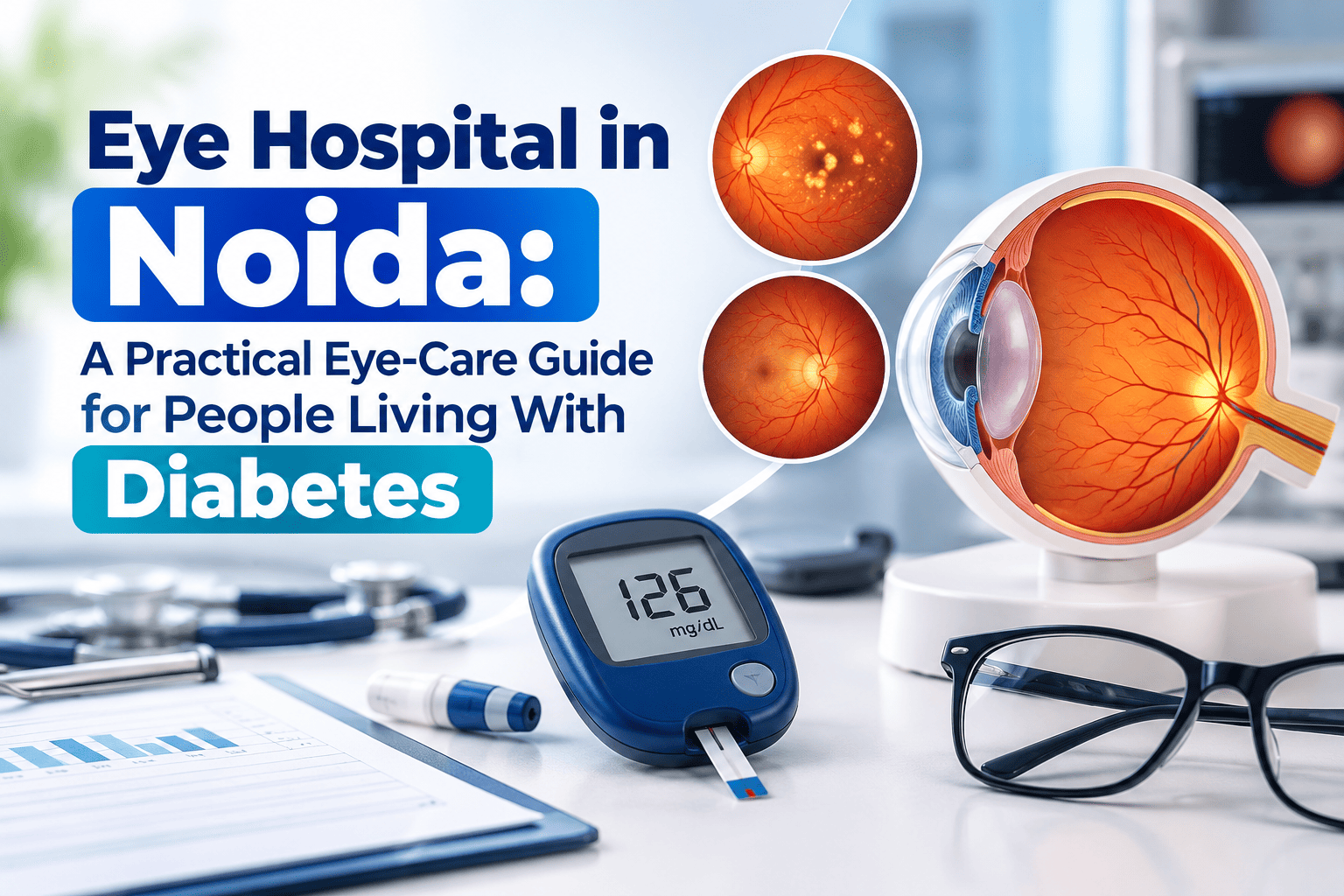
Living with diabetes often means tracking blood glucose, reviewing medicines and keeping regular medical appointments. Eye health deserves a place in that routine, even when reading, driving and everyday activities still feel normal. Diabetes can affect the small blood vessels of the retina long before a person notices a problem. It can also influence decisions about cataract surgery, spectacle changes and elective vision correction.
For someone searching for an eye hospital in Noida, the useful question is not simply where to get an eye test. It is which examinations will help establish the condition of the retina, lens, cornea and other structures, and how those findings may affect future treatment. This guide focuses on practical decisions for adults with diabetes: when to arrange retinal screening, which investigations might be recommended, what to discuss before cataract or refractive surgery, and how to prepare for follow-up.
Why an eye examination matters even when vision seems clear
Diabetic retinopathy develops when diabetes damages retinal blood vessels. In its early stages, there may be no blur, pain, redness or other warning sign. A person may read the smallest line on an eye chart and still have retinal changes that require monitoring. This is why checking spectacle power alone is not an adequate substitute for retinal assessment.
Macular edema is another concern. The macula is the central part of the retina used for reading and recognising faces. Fluid accumulating in or around this area may affect central vision. A person can have retinopathy without macular edema, macular edema without severe symptoms, or several eye conditions at once. A complete diagnosis matters because the treatment pathway differs.
Diabetes may also be associated with cataract developing at an earlier age or progressing more quickly. Temporary changes in blood glucose can cause fluctuations in focusing and spectacle power. A new prescription obtained while glucose is changing rapidly may not remain accurate. These possibilities should be considered rather than assuming that every visual change requires new glasses or surgery.
When should a person with diabetes book an eye appointment?
Adults with type 2 diabetes should generally have a dilated eye examination at diagnosis, because the condition may have been present for some time before detection. For type 1 diabetes, the timing of the first retinal examination differs and should follow medical guidance. After an initial assessment, many adults require at least annual retinal monitoring, although the interval can be shorter or, in selected low-risk situations, adjusted by their treating clinician. Pregnancy, established retinopathy, recent changes in sight and other risk factors can alter this plan.
Do not postpone an appointment until blood sugar becomes perfectly controlled. Eye evaluation and diabetes management work together. Bring recent HbA1c or glucose information if available, but do not assume that a single number can reveal the state of the retina. Duration of diabetes, blood pressure, kidney health, cholesterol, previous retinal findings and pregnancy status can also be relevant.
A planned review is different from an urgent problem. Sudden vision loss, a new dark curtain, many new floaters with flashes, severe eye pain or significant injury require prompt assessment, not a routine screening appointment. If chemicals enter the eye, begin immediate irrigation with clean water or saline and seek emergency care.
What happens during diabetic eye screening at an eye hospital in Noida?
An eye-care visit usually begins with questions about symptoms, the duration of diabetes, medicines and earlier eye treatments. Visual acuity and refraction assess how clearly you see and whether lenses improve that clarity. The ophthalmologist may examine the front of the eye with a slit lamp, check pressure, and assess the lens for cataract or other findings.
Dilating drops may be used to widen the pupils, allowing examination of the retina and optic nerve. Blurred near vision and light sensitivity can continue for several hours after dilation, so ask in advance whether you should arrange transport. Dilation does not automatically mean there is an abnormality; it is a way to see the back of the eye more thoroughly.
Not everyone needs every scan. The appropriate investigations depend on the examination and the clinical question. Patients can ask what a test is expected to show, how it could change management and whether follow-up imaging will be needed.
Dilated retinal examination and retinal photographs
A dilated examination helps the clinician identify bleeding, abnormal blood vessels and other retinal changes. Retinal photographs can document findings for comparison during later visits. A photograph is useful, but the doctor may still need a direct examination or other imaging when indicated. A normal visual-acuity result does not rule out early retinopathy.
Optical coherence tomography (OCT)
OCT provides detailed cross-sectional images of the retina. When macular swelling is suspected, the scan can help show whether fluid or structural changes are affecting the central retina. It is also useful for monitoring response to certain treatments. An OCT is not a replacement for examination of the entire peripheral retina.
Fundus fluorescein angiography (FFA)
For selected cases, fluorescein angiography uses dye and retinal photographs to study blood-vessel leakage and circulation. It is not a routine requirement for every patient with diabetes. The clinical team should discuss the reason for the investigation and relevant medical history before proceeding.
Eye pressure, optic nerve and cataract assessment
People with diabetes can have eye conditions other than diabetic retinopathy. Eye-pressure measurement and evaluation of the optic nerve can identify findings that warrant glaucoma assessment. Examining the lens may establish whether cataract is contributing to reduced vision. Several problems can exist together, so identifying only one may not fully explain the patient’s symptoms.
ICARE Eye Hospital & Post Graduate Institute describes diabetic eye disease and investigations on its official page: https://www.icarehospital.org/diabetic-eye-disease/. Its vitreoretina department also lists OCT, angiography, retinal lasers and other diagnostic and treatment resources: https://www.icarehospital.org/doctor-department/vitreo-retinal/.
If diabetic retinopathy is found, does it always need immediate treatment?
No. Management depends on the severity of retinopathy, whether the macula is involved, the presence of abnormal new blood vessels and the risk to vision. Some patients are monitored closely while their overall diabetes and blood-pressure care continue. Others may need retinal injections, laser treatment or, in advanced cases, vitreoretinal surgery.
The purpose of treatment may be to stabilise disease and reduce the risk of future vision loss. Improvement is possible in some circumstances, but it cannot be promised. The treating retina specialist should explain the proposed treatment, expected benefit, limitations, potential risks and follow-up schedule. It is also important to understand that retinal disease can require long-term monitoring even after an apparently successful course of treatment.
Controlling diabetes is valuable but does not instantly reverse established retinal damage. Equally, receiving retinal treatment does not replace medical management of blood glucose, blood pressure and other systemic risk factors. Eye specialists and the physician managing diabetes often need to work in parallel.
Diabetes and cataract surgery: questions to settle before choosing a lens
Cataract is clouding of the natural lens. A person may report hazy vision, sensitivity to glare, difficulty driving at night or colours appearing less vivid. When cataract affects daily function and the findings support surgery, an ophthalmologist can discuss the options. For someone with diabetes, however, cataract planning should include an assessment of the retina and macula whenever the view and clinical circumstances allow.
Why? If a person has macular edema or significant retinopathy, removing the cloudy lens may not fully restore clarity. Cataract surgery can also be followed by changes in retinal swelling in some patients. A realistic discussion of visual prognosis depends on knowing how healthy the retina is before the operation.
The choice of intraocular lens deserves similar care. Monofocal, toric, multifocal and other lens designs address different visual needs, but not every lens is appropriate for every eye. Existing retinal disease, corneal findings, astigmatism, occupation, night-driving needs and expectations may influence the recommendation. A premium-priced lens cannot compensate for retinal disease or guarantee spectacle-free vision.
For cataract services and the clinical information available from ICARE, see https://www.icarehospital.org/sector-26-noida/. When booking, ask whether a retinal opinion is needed before the cataract evaluation, whether there are active retinal changes and what follow-up is expected after surgery.
Can someone with diabetes consider LASIK, Contoura Vision, SILK or ICL?
Diabetes is not a condition that can be ignored during refractive-surgery screening. Whether a particular person might be a candidate depends on factors including stability of refractive power, blood-glucose control, corneal health, tear-film quality, retinal status, other complications and the specific procedure being considered. Some people with diabetes are unsuitable for elective refractive surgery; others may be evaluated on an individual basis.
A LASIK doctor in Noida should not recommend a technique solely because a patient asks for Contoura Vision, blade-free LASIK or SILK laser surgery by name. Contoura is associated with a topography-guided treatment approach; the term blade-free commonly refers to the way a corneal flap is created in some LASIK procedures; SILK is a different lenticule-based laser approach. ICL uses an implanted lens rather than corneal laser reshaping. They are not interchangeable labels, and none can be declared universally suitable from an online enquiry.
Before considering a procedure, the clinician may evaluate refraction, corneal shape and thickness, tear film, pupil-related factors and the back of the eye. If diabetes-related eye disease is present, the surgical plan may change, be deferred or not be recommended. An individualised risk-benefit discussion matters more than promises about a particular technology.
If you notice frequent changes in spectacle power while glucose readings fluctuate, explain this at the consultation. It may be sensible to stabilise the underlying medical situation and repeat measurements before making an irreversible elective decision. Do not stop diabetes medicines or contact lenses without instructions from the appropriate clinician; contact-lens discontinuation before measurement should follow the refractive team’s specific guidance.
What does a clear retinal report actually mean?
A reassuring result means the examination did not identify a particular concerning finding at that time. It does not mean that diabetes can no longer affect the eyes. Retinopathy risk changes with time, which is why a documented future review date is useful even when no treatment is prescribed.
Ask for an explanation in ordinary language. Was the retina fully examined? Was any diabetic retinopathy seen? Is the macula affected? Were images taken as a baseline? Is the next visit routine or sooner because of a particular finding? If a result is described as mild, moderate or severe, ask what the classification means for monitoring and treatment decisions.
Patients who attend several clinics may benefit from keeping a single folder of reports. Include the date of examination, imaging findings, current spectacles, medication list and advice about return visits. Comparable records can make progression or stability easier to assess across appointments.
A practical checklist for a family managing diabetes
A useful eye-care plan is simple enough to follow. Put the next retinal examination on a calendar rather than relying on symptoms as a reminder. Tell the eye doctor about type of diabetes, duration, blood-pressure problems, kidney disease, pregnancy or plans for pregnancy and prior eye injections or laser procedures. Bring photographs or scans if they were done elsewhere. If you have cataract symptoms or are interested in glasses removal, mention these goals while making it clear that retinal health comes first.
Keep the treatment plan in writing. Confirm which team manages blood glucose, which ophthalmologist is following the retina and who should be contacted if vision changes suddenly. If drops are prescribed, understand the dosing instructions and duration. If injections or procedures are planned, ask about follow-up and the symptoms that should prompt earlier review.
Screening also applies to people who feel well. A parent who drives without glasses, an office worker who reads comfortably on a laptop and an older adult whose vision seems unchanged may all benefit from timely retinal checks if they have diabetes. The goal is to detect treatable problems before they cause avoidable visual harm.
Eye care for Noida patients: where ICARE fits into the pathway
ICARE Eye Hospital & Post Graduate Institute is located in Sector 26, Noida, Uttar Pradesh. Its official website lists clinical services across cataract, retina and uvea, glaucoma, cornea, pediatric ophthalmology and refractive care. For a person with diabetes, access to a retinal examination is relevant even when the original appointment request concerns spectacles, cataract or LASIK.
The value of a coordinated visit is that the diagnosis can guide the next step. A patient with stable retinal findings might simply need scheduled monitoring. Another might require a retina consultation before cataract planning. Someone considering vision correction may need a different work-up or advice against surgery. These are clinical decisions made after examining the individual, not conclusions to draw from an online description.
Read ICARE’s centre information at https://www.icarehospital.org/sector-26-noida/ and use its contact page to confirm the appropriate appointment channel: https://www.icarehospital.org/contact-us/. Patients coming from Greater Noida or other parts of Delhi NCR can confirm the relevant centre, doctor availability and any pre-visit requirements when booking.
Frequently Asked Questions
1. I have diabetes but see clearly. Do I still need a retinal examination?
Yes. Early diabetic retinopathy can develop without noticeable visual symptoms. Your clinician can recommend an appropriate dilated examination and ongoing screening interval based on your history and findings.
2. Can a regular glasses-power test detect diabetic retinopathy?
Not reliably. Refraction measures optical power and clarity, whereas diabetic retinopathy requires evaluation of the retina. A comprehensive ophthalmic assessment may involve dilation and retinal imaging when indicated.
3. How often should I visit an eye hospital in Noida if I have type 2 diabetes?
A dilated eye examination is generally recommended at diagnosis, with follow-up often at least annually. The interval should be personalised, especially if retinopathy or other risk factors are present.
4. Will every person with diabetes need an OCT scan?
No. OCT is particularly useful when the ophthalmologist needs to evaluate the macula or monitor changes. It is ordered according to clinical findings rather than being mandatory for every visit.
5. Is diabetic retinopathy always treated with injections?
No. Some cases need observation, while others may require injections, laser treatment or surgery. Treatment depends on retinal findings and the risk to vision.
6. Can cataract surgery help if I also have diabetic retinopathy?
It may improve vision limited by cataract, but retinal disease can affect the final result. The cataract surgeon and retina specialist may need to assess and manage retinal problems before or around surgery.
7. Does diabetes automatically rule out LASIK or Contoura Vision?
Not automatically in every situation, but it raises important screening considerations. The ophthalmologist must assess systemic control, ocular health, healing-related risks, refractive stability and procedure-specific suitability.
8. Why does my glasses number change when my blood sugar changes?
Changes in blood glucose can temporarily alter the focusing characteristics of the eye. Tell the eye doctor about recent fluctuations so the timing of spectacle measurements can be considered carefully.
9. Which symptoms need urgent attention rather than a routine diabetic eye check?
Sudden visual loss, a curtain over vision, a sudden increase in floaters with flashes, severe eye pain or significant eye injury warrant urgent assessment. Chemical exposure requires immediate rinsing while emergency care is arranged.
10. What should I bring to a diabetic eye-care appointment?
Bring current spectacles, earlier prescriptions and retinal scans, a medication list and relevant diabetes or blood-pressure records if available. Explain past laser treatment, injections, eye surgery and any recent symptoms.
Book an eye consultation at ICARE Eye Hospital, Noida
ICARE Eye Hospital & Post Graduate Institute, E3A, ICARE Eye Hospital Road, Sector 26, Noida, Uttar Pradesh 201301.
Sector 26 appointments: +91-9811880015. Hospital: +91-120 3586666 / 600 / 601 / 602. Official website: https://www.icarehospital.org/. Appointments and location information: https://www.icarehospital.org/contact-us/. Please confirm current timings, specialist availability and whether dilation or diagnostic testing is expected before visiting.
Conclusion: protect vision by planning ahead
For people with diabetes, eye care works best as an ongoing plan rather than a reaction to blurred vision. The retina may need attention even when spectacle vision is good. Cataract decisions require consideration of retinal health, and elective procedures such as LASIK, Contoura Vision, SILK or ICL require individual screening rather than assumptions about suitability.
If you are looking for an eye hospital in Noida, begin with the clinical question most relevant to you: Do I need a diabetic retinal check, an explanation of a previous report or an assessment before cataract or refractive surgery? A well-directed consultation can help establish the next appropriate step and a sensible follow-up schedule.