ankara escort ankara escort

Eye Hospital in Noida: When to See an Eye Specialist and What to Expect From a Comprehensive Eye Check-Up

Your eyes can change gradually, and many eye conditions do not cause obvious symptoms in their early stages. A person may notice mild blur, eye strain, glare while driving, frequent headaches, difficulty reading small print, dryness, or a change in spectacle power and assume that the problem is temporary. In some cases, however, these changes deserve a complete eye examination rather than another pair of glasses or self-treatment with over-the-counter drops.

If you are searching for an Eye Hospital in Noida, the most useful starting point is to understand what kind of eye care you actually need. Some patients require only a routine vision assessment, while others may need evaluation by a cataract, retina, glaucoma, cornea, paediatric, or refractive-surgery specialist. A comprehensive eye hospital can help direct the patient to the appropriate service after the initial examination.

ICARE Eye Hospital & Post Graduate Institute in Sector 26, Noida provides tertiary eye care and refractive services in the Delhi NCR region. The hospital’s current website lists specialists in cataract and refractive services and provides vision-correction options such as LASIK-related procedures, Contoura Vision, SILK and ICL for suitable candidates. The right treatment, however, depends on the findings of an eye examination, not simply on the name of a procedure.

Why a Comprehensive Eye Examination Matters

A vision test checks how clearly you can see, but a complete eye assessment can look at much more than spectacle power. Depending on your symptoms, age, medical history and the ophthalmologist’s findings, an examination may involve evaluation of the front of the eye, eye pressure, the cornea, lens, retina and optic nerve. Additional diagnostic tests may be recommended when clinically appropriate.

This distinction is important because different eye conditions can produce similar symptoms. Blurred vision may be related to refractive error, cataract, dry eye, corneal disease, retinal problems, glaucoma-related damage or other causes. A patient who only updates spectacles without investigating a new or unexplained change could delay the diagnosis of an underlying condition.

For patients looking for an Eye Hospital in Noida, a practical question is therefore not only “Where can I get my power checked?” but also “Can the centre assess the possible cause of my symptoms and refer me to the right eye specialist if needed?”

Signs That You Should Consider Visiting an Eye Hospital

Some eye problems can be monitored routinely, while others require prompt attention. You should consider arranging an eye examination if you notice a persistent change in vision, especially when it is new, unexplained or affecting daily activities.

  • Blurred or fluctuating vision that does not settle after rest.
  • Frequent headaches or eye strain associated with reading, computer work or near tasks.
  • Difficulty seeing at night, glare from headlights or halos around lights.
  • A noticeable change in spectacle or contact-lens prescription.
  • Persistent redness, watering, burning, grittiness or dryness.
  • Reduced contrast, faded colours or difficulty reading in normal light.
  • New floaters, flashes of light or a curtain-like shadow in the field of vision.
  • Eye pain, sudden loss of vision, injury or chemical exposure.
  • Children sitting very close to screens, squinting, closing one eye or struggling with schoolwork.
  • People with diabetes, a family history of glaucoma, or previous eye disease who are due for monitoring.

Sudden vision loss, severe eye pain, significant injury, chemical exposure, or a sudden increase in flashes and floaters can represent urgent problems. These symptoms should not be treated as routine optical complaints. Seek urgent ophthalmic assessment rather than waiting for a scheduled annual check-up.

Which Eye Specialist Might You Need?

A major advantage of a comprehensive eye-care centre is the ability to evaluate different parts of the visual system. Patients often search for an “eye doctor in Noida” without knowing which subspecialty is relevant. The initial examination can help determine the correct direction.

Cataract and Anterior-Segment Care

Cataract is a clouding of the eye’s natural lens. Common complaints include gradual blur, glare, difficulty with night driving, washed-out colours and frequent changes in glasses. Cataract treatment decisions are based on how the condition affects vision and daily activities, along with examination findings. Not every person with an early cataract needs immediate surgery.

ICARE’s current website lists cataract and refractive specialists, including Dr. Saurabh Choudhry, Dr. Shalini Sharma, Dr. Hafsa Bashir, Dr. Metu Rajput and other consultants in related services. Specific treatment recommendations should be made only after clinical assessment.

Retina Evaluation

The retina is the light-sensitive tissue at the back of the eye. Retinal problems may occur with diabetes, ageing, high myopia and other conditions. Symptoms such as new floaters, flashes, distortion, a dark curtain or sudden loss of vision require timely evaluation. People with diabetes also need regular retinal assessment because diabetic retinal disease can progress before vision becomes noticeably worse.

Glaucoma Assessment

Glaucoma can damage the optic nerve and may progress without obvious early symptoms. Eye pressure is one part of glaucoma assessment, but diagnosis may also require evaluation of the optic nerve and, when indicated, visual-field or imaging tests. People with a family history of glaucoma, increasing age, previous eye trauma, certain medical conditions or suspicious examination findings may need closer monitoring.

Cornea and Ocular-Surface Care

The cornea is the clear front surface of the eye. Corneal disease, keratoconus, infections, scars and severe ocular-surface problems can affect visual quality. Persistent dryness, redness, light sensitivity, contact-lens intolerance or irregular vision may justify a corneal evaluation. ICARE’s website lists consultants with cornea and refractive responsibilities, including Dr. Hafsa Bashir and Dr. Ritika Mullick.

Paediatric Eye Care and Squint

Children do not always recognise or report visual difficulty. Parents may notice squinting, abnormal head posture, one eye turning, frequent eye rubbing, headaches, poor reading stamina or sitting unusually close to books and screens. Early assessment is important because some childhood vision problems are more effectively managed when identified at a younger age.

Refractive Surgery and Specs-Removal Evaluation

Adults who want to reduce dependence on spectacles or contact lenses may explore refractive surgery. However, LASIK, SILK, Contoura Vision, PRK-type procedures and ICL are not interchangeable and are not suitable for every person. A refractive consultation should determine whether the prescription is stable, whether the cornea is suitable, whether the ocular surface is healthy and whether another eye condition is present.

The American Academy of Ophthalmology and the U.S. FDA both emphasise candidate selection, realistic expectations and discussion of risks and alternatives before LASIK. Factors such as unstable refractive error, thin or unhealthy corneas, significant dry eye and certain ocular or medical conditions may affect suitability.

What Happens During a Comprehensive Eye Check-Up?

The exact examination differs from patient to patient, but a well-structured visit usually starts with your symptoms and medical history. Tell the ophthalmology team when the problem began, whether one or both eyes are affected, whether symptoms are constant or intermittent, and whether you have diabetes, hypertension, previous eye surgery, eye injury or a family history of important eye disease.

  1. Visual acuity and refraction may be checked to understand how clearly you see and whether a spectacle correction improves vision.
  2. The front of the eye may be examined to assess the eyelids, tear film, cornea, anterior chamber and lens.
  3. Eye pressure may be measured when appropriate, particularly when glaucoma risk or symptoms are relevant.
  4. The pupils may be dilated for a better view of the retina and optic nerve when the ophthalmologist considers it necessary.
  5. Additional imaging or diagnostic tests may be advised according to the suspected condition. These tests are selected for a clinical reason rather than performed identically for every patient.
  6. The ophthalmologist then explains the findings, whether treatment is required, what alternatives exist and when follow-up should occur.

If your pupils are dilated, near vision and light sensitivity may be temporarily affected. It can be useful to carry sunglasses and avoid planning activities that require crisp near vision immediately afterwards. Follow the hospital’s advice regarding driving after dilation.

Choosing an Eye Hospital in Noida: What Patients Should Check

Online rankings can help you discover nearby centres, but they should not be the only basis for choosing medical care. The more useful approach is to evaluate whether the hospital can provide the clinical pathway you need.

1. Availability of the Relevant Eye Specialty

A centre that mainly handles routine optical problems may not be appropriate for a patient with retinal disease, glaucoma, corneal pathology or a complex refractive-surgery question. Before booking, confirm that the relevant specialist or service is available.

2. Diagnostic Capability

Accurate treatment begins with accurate diagnosis. Depending on the condition, an ophthalmologist may require imaging, corneal measurements, visual-field testing, retinal evaluation or other investigations. A useful eye-care centre should be able to explain why a test is needed and how the result affects the treatment plan.

3. Clear Communication About Options

Patients should be told what has been found, what treatment is being considered, what alternatives exist and what follow-up is required. This is especially important for elective procedures such as laser vision correction, where a patient should have time to understand benefits, limitations and possible risks before deciding.

4. Follow-Up After Treatment

Many eye conditions require monitoring rather than a one-time visit. Glaucoma, diabetic retinal disease, dry eye, corneal conditions and post-operative recovery may require scheduled follow-up. Ask how follow-up is handled and what symptoms should prompt an earlier review.

5. Verified Location and Contact Information

For local searches such as Eye Hospital Near Me or Eye Hospital in Noida, verify the current address and phone number on the hospital’s official website rather than relying only on third-party directories. ICARE’s current contact page lists its Sector 26 centre at E3A, Sector-26, Noida – 201301, Uttar Pradesh, India.

Eye Hospital Near Me: When Convenience Matters and When It Should Not

Location matters for routine appointments, post-operative reviews and conditions that require repeated monitoring. A nearby hospital can make follow-up easier. However, the nearest facility is not automatically the right facility for every problem. If you need a specific subspecialist or diagnostic service, clinical suitability should take priority over a few minutes of travel time.

Patients in Noida, Greater Noida West and nearby parts of Delhi NCR often use “near me” searches because they want immediate local options. When comparing results, check the official website for the exact centre, service availability, appointment process and contact details before travelling.

When the Search Is for LASIK, Contoura, SILK or ICL

Your supplied ranking report shows strong visibility for several refractive keywords, including LASIK Hospital in Noida, Contoura Vision in Noida, Blade Free LASIK Surgery in Noida, SILK Laser Surgery in Noida and ICL Surgery in Noida. For a patient, however, the correct next step is not to pick the procedure with the highest online visibility. It is to establish which procedure, if any, is suitable for the eye.

ICARE’s current specs-removal page lists WaveLight Plus (InnovEyes), Contoura Vision, SILK, Streamlight (Robotic PRK) and phakic lens/ICL procedures. Its Contoura page describes topography-guided treatment and FemtoContoura. These options should be discussed in the context of an individual examination rather than treated as universal solutions.

LASIK Candidate Screening

A LASIK consultation is more than checking spectacle power. The ophthalmologist may assess prescription stability, corneal thickness and shape, ocular-surface health, overall eye health and the patient’s expectations. Some people may be advised to postpone surgery, treat dry eye first, consider an alternative procedure, or continue with spectacles or contact lenses.

Why “Not Suitable for LASIK” Does Not End the Conversation

Not being a LASIK candidate simply means that LASIK may not be the appropriate option. Depending on the clinical findings, another refractive approach may be discussed. For example, an ICL is a lens-based refractive procedure used in selected patients rather than a corneal laser procedure. The choice depends on ocular anatomy, refractive error and the surgeon’s assessment.

How to Prepare for Your Eye Appointment

A little preparation can make the consultation more useful. Bring your current spectacles and any older prescriptions if available. If you have previous eye reports, surgical records, retinal scans, glaucoma tests or a list of current medicines, carry them with you. Tell the doctor about systemic conditions such as diabetes and about any family history of serious eye disease.

If you are specifically attending for refractive-surgery evaluation and you wear contact lenses, ask the hospital in advance whether you should stop wearing them for a period before corneal measurements. Contact lenses can temporarily alter corneal shape, and the required discontinuation period can vary by lens type and the clinic’s protocol.

Why Regular Eye Checks Become More Important With Age and Medical Risk

Eye-care needs change over time. Children may need assessment for refractive errors, squint or amblyopia risk. Young adults may develop dry eye, contact-lens problems or refractive-surgery questions. With increasing age, cataract, glaucoma and retinal conditions become more relevant. People with diabetes require particular attention to retinal health.

There is no single examination interval that is correct for everyone. The schedule should be based on age, symptoms, existing eye disease, family history, systemic illness and the ophthalmologist’s findings. A person already being monitored for glaucoma or diabetic retinal disease may need much more frequent review than an otherwise healthy adult.

About ICARE Eye Hospital, Noida

ICARE Eye Hospital & Post Graduate Institute describes itself as a tertiary eye-care institute serving the NCR region. Its current refractive website lists the Sector 26, Noida centre and a Greater Noida West centre. The Sector 26 contact details currently published are E3A, Sector-26, Noida – 201301, Uttar Pradesh, India, with telephone numbers including 0120 3586611 and +91-9910430391.

The hospital website also lists refractive specialists and services for patients considering spectacle-removal procedures. Because doctors, schedules and service availability can change, patients should confirm the required specialty and appointment details directly before visiting.

Useful ICARE Pages for Patients

ICARE LASIK and refractive services home page: https://www.icarelasik.com/

Contact ICARE Eye Hospital, Noida: https://www.icarelasik.com/contact-us/

Specs-removal and refractive surgery appointment information: https://www.icarelasik.com/appointment-specs-removal/

Contoura Vision and FemtoContoura information: https://www.icarelasik.com/contoura-and-femtocontoura/

Related reading: Complete Eye Care You Can Trust: https://www.icarelasik.com/complete-eye-care-you-can-trust-best-eye-hospital-in-delhi-noida-icare-eye-hospital/

Frequently Asked Questions

1. When should I visit an eye hospital instead of an optical store?

If you have new or persistent visual symptoms, eye pain, sudden changes, flashes or floaters, an eye injury, a known eye disease, diabetes, or a concern requiring medical diagnosis, an ophthalmic examination is more appropriate than a simple spectacle-power check.

2. What should I look for when choosing an Eye Hospital in Noida?

Check whether the hospital provides the specialty you need, has appropriate diagnostic facilities, explains treatment options clearly, offers follow-up care and publishes current contact information on its official website.

3. Can blurred vision always be corrected with new glasses?

No. Blurred vision can come from refractive error, but it may also be related to cataract, dry eye, corneal disease, retinal problems or other eye conditions. A new or unexplained change should be assessed by an eye-care professional.

4. Are regular eye checks important if I have diabetes?

Yes. Diabetes can affect the retina, and retinal changes may develop before a person notices major symptoms. Your ophthalmologist will advise the appropriate review schedule based on your diabetic and eye-health status.

5. What symptoms need urgent eye assessment?

Sudden loss of vision, severe eye pain, significant trauma, chemical exposure, or sudden flashes, many new floaters or a curtain-like shadow in vision can require urgent assessment.

6. Is LASIK suitable for everyone who wears glasses?

No. LASIK candidacy depends on factors such as age, prescription stability, corneal characteristics, ocular-surface health, overall eye health and realistic expectations. Some patients may need a different option or may be advised not to have refractive surgery.

7. What is the difference between LASIK and ICL?

LASIK reshapes the cornea using laser treatment in suitable candidates. ICL is a lens-based refractive procedure in which a specially designed lens is implanted inside the eye. The appropriate option depends on an individual examination.

8. Is Contoura Vision the same as standard LASIK?

Contoura is a topography-guided approach to laser vision correction that uses detailed corneal surface information for treatment planning. Whether it is appropriate depends on the patient’s corneal findings and the refractive surgeon’s assessment.

9. Where is ICARE Eye Hospital located in Noida?

ICARE’s current contact page lists its Sector 26 centre at E3A, Sector-26, Noida – 201301, Uttar Pradesh, India. Patients should confirm the specific department and appointment details before travelling.

10. How can I book an appointment for eye or refractive evaluation at ICARE?

You can use the hospital’s official contact and appointment pages or call the current numbers listed on its website. For refractive services, the official site provides a dedicated specs-removal appointment page.

Book an Eye Consultation in Noida

If you have a persistent vision concern, are due for an eye examination, or want to understand whether you are suitable for a refractive procedure, begin with a clinical assessment rather than choosing a treatment online.

ICARE Eye Hospital & Post Graduate Institute, Sector 26, Noida
Address: E3A, Sector-26, Noida – 201301, Uttar Pradesh, India
Phone: 0120 3586611 | +91-9910430391
Website: https://www.icarelasik.com/
Contact and appointment information: https://www.icarelasik.com/contact-us/

Conclusion

Searching for an Eye Hospital in Noida is usually the first step, not the final decision. The more important question is whether the hospital can identify the cause of your symptoms, connect you with the right specialist and provide appropriate follow-up. Routine refractive errors, cataract, retinal disease, glaucoma, corneal problems, paediatric eye conditions and refractive-surgery questions all require different clinical pathways.

For patients considering LASIK, Contoura Vision, SILK, ICL or another specs-removal option, careful screening and informed decision-making are essential. For patients with general eye-health concerns, a comprehensive examination can help distinguish a simple power change from a condition that needs medical attention. Early assessment is particularly important when symptoms are sudden, progressive or associated with medical risk factors.

A useful eye-care decision is based on the right diagnosis, the right specialist and a treatment plan suited to the individual eye.
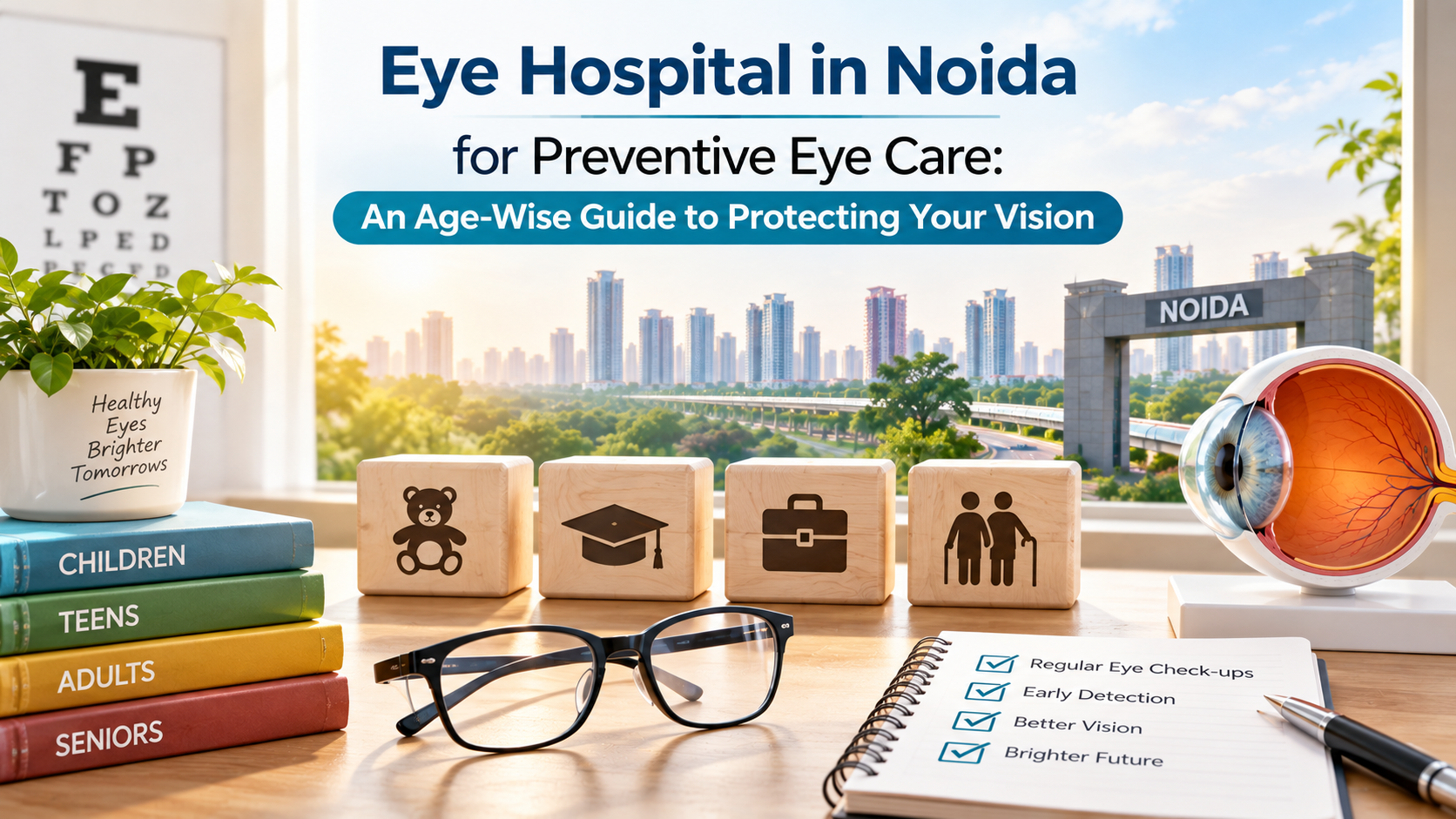
Eye Hospital in Noida for Preventive Eye Care: An Age-Wise Guide to Protecting Your Vision

Most people visit an eye hospital only after they notice blurred vision, difficulty reading, eye pain, redness or a sudden change in sight. But many important eye problems do not begin with dramatic symptoms. Some develop gradually, some affect only one eye at first, and others may remain unnoticed until they have already started affecting vision. That is why preventive eye care matters at every stage of life.

If you are searching for an Eye Hospital in Noida, it helps to think beyond treatment for an existing complaint. A comprehensive eye hospital can also play an important role in routine examinations, age-related screening, monitoring of risk factors, children’s vision care, diabetic eye evaluation, refractive surgery assessment and long-term follow-up. The goal is not to perform unnecessary tests. It is to identify the right examination at the right time, based on age, symptoms, medical history and individual risk.

ICARE Eye Hospital & Post Graduate Institute in Sector 26, Noida provides tertiary eye care and multiple ophthalmic services. For patients and families in Noida and the wider Delhi NCR region, understanding when to schedule an eye examination can make the visit more useful and can help ensure that the appropriate specialist is involved when needed.

Why Preventive Eye Care Matters Even When Vision Feels Normal

Clear vision on a normal day does not always mean every part of the eye is healthy. Some conditions, particularly in their earlier stages, can cause little or no noticeable change. Glaucoma is a well-known example because optic nerve damage may progress before a person becomes aware of peripheral vision loss. Early diabetic retinal changes can also be present before a patient notices symptoms. In children, one eye can sometimes see less clearly than the other without the child realizing that anything is wrong.

A comprehensive eye examination gives an ophthalmologist an opportunity to assess more than spectacle power. Depending on the patient, the visit may include visual acuity testing, refraction, eye-pressure measurement, slit-lamp examination, pupil assessment and examination of the retina or optic nerve. Additional tests are recommended only when the history or examination indicates that they are needed.

For a broader overview of comprehensive eye care in Noida, patients can also review: https://www.icarelasik.com/eye-hospital-in-noida-complete-guide-to-eye-care/

An Age-Wise Eye Care Roadmap for Families in Noida

There is no single eye-check schedule that is correct for everyone. Frequency depends on age, risk factors, existing eye disease, use of spectacles or contact lenses, diabetes and other health conditions. The following age-wise guide is intended to help patients understand when an eye hospital visit may become relevant. Your ophthalmologist may advise a different schedule based on your individual findings.

Infants and Young Children: Vision Develops Before Children Can Explain a Problem

Early childhood is a critical period for visual development. A baby or young child cannot always tell a parent that one eye is blurry, that the eyes are not working together properly or that focusing is difficult. Parents should therefore pay attention to how the child looks at faces and objects, whether the eyes appear aligned, whether there is persistent watering or discharge, and whether one eye consistently turns inward or outward.

Vision screening during childhood is designed to identify children who may need a complete eye examination. A failed screening, suspected squint, abnormal eye appearance, persistent head tilt, poor visual attention or a family history of significant childhood eye disease are reasons to seek a professional assessment rather than waiting for school performance to decline.

A pediatric ophthalmology evaluation is different from simply checking whether a child can read letters on a chart. Depending on age and cooperation, the ophthalmologist may assess eye alignment, focusing ability, refractive error and the health of the eye. Early identification of amblyopia, commonly called lazy eye, is particularly important because treatment is generally more effective while the visual system is still developing.

School-Age Children and Teenagers: Do Not Assume Every Problem Is Screen Time

School-age children may begin to show more practical signs of vision difficulty. They may sit closer to the board or television, squint to see far away, hold books unusually close, complain of headaches after near work or lose interest in visually demanding tasks. These symptoms can have different causes, so an eye examination should focus on the actual visual problem rather than assuming that every complaint is caused by mobile phones or computers.

Increasing myopia is common during the school years and adolescence. If spectacle power is changing, regular review helps ensure that vision is corrected appropriately and allows the ophthalmologist to decide whether any additional monitoring is indicated. Children who wear contact lenses also need guidance about hygiene, safe wearing habits and when to stop lens use because of redness, pain or sensitivity to light.

For families looking for the appropriate specialist, this guide explains how different eye problems may be directed to different ophthalmology services: https://www.icarelasik.com/eye-doctors-in-noida-specialists-eye-care-guide/

Adults in Their 20s and 30s: Good Vision Does Not Eliminate the Need for Eye Awareness

Many younger adults have no eye disease and need only routine vision care. However, this age group often spends long hours on laptops and smartphones, drives at night, uses contact lenses, participates in sports and may be considering laser vision correction. Eye strain, fluctuating clarity, dryness and contact-lens discomfort are common reasons to seek an examination.

Digital work can contribute to tired eyes, reduced blinking and dryness, but persistent blurred vision, recurrent redness, pain or one-sided symptoms should not automatically be labelled as screen fatigue. An examination can help separate refractive error and ocular-surface problems from other conditions that need different management.

Adults with high spectacle power, a history of eye injury, previous eye surgery, a strong family history of glaucoma or retinal disease, or systemic conditions that can affect the eyes may need more individualized follow-up even when they are young.

Around Age 40 and Midlife: Near Vision Changes and Baseline Eye Health Become More Important

Many people first notice difficulty with near vision in their early to mid-40s. They may hold the phone farther away, need brighter light to read, or remove distance glasses for close work. These changes are often related to presbyopia, the age-related reduction in the eye’s ability to focus at near distances.

However, midlife is also a sensible time to pay closer attention to eye health as a whole. An eye examination should not be reduced to choosing reading glasses. The ophthalmologist may consider eye pressure, optic nerve appearance, the lens, cornea and retina depending on the patient’s history and risk factors. People with a family history of glaucoma, diabetes, high blood pressure, significant myopia or previous eye disease may require closer monitoring.

If the main concern is reducing dependence on spectacles, a refractive consultation should still begin with a complete eye assessment. Age, corneal characteristics, tear-film health, current prescription and early lens changes can all influence which options are appropriate.

Adults in Their 50s, 60s and Beyond: Watch for Gradual Changes, Not Only Sudden Loss

With increasing age, cataract becomes more common and the risk of several other eye conditions also rises. Cataract may cause gradual blur, glare from headlights, reduced contrast, faded colours or difficulty reading despite updated spectacles. These changes often develop slowly, so patients may adapt without realizing how much visual quality has changed.

Older adults may also need evaluation for glaucoma, retinal conditions and age-related changes at the back of the eye. The appropriate examination frequency depends on findings and risk profile. A person who has a diagnosed eye condition, previous surgery or a strong family history may need more frequent visits than someone with no known risk factors.

One practical rule is important at every age: a sudden change should never be treated as a routine age-related problem. Sudden loss of vision, a curtain or shadow in the field of vision, a burst of new floaters, flashes of light, severe eye pain, significant injury or chemical exposure requires prompt medical assessment.

Who May Need Eye Examinations More Often, Regardless of Age?

Age is only one part of eye-care planning. Some people need closer observation because their medical history or eye history places them at higher risk. Your ophthalmologist should determine the follow-up interval, but it is useful to recognize the situations that deserve particular attention.

  • Diabetes: Diabetes can affect the retina and may cause diabetic retinopathy. Retinal evaluation is important because early disease may not cause obvious symptoms.
  • Family history of glaucoma: Glaucoma can be associated with hereditary risk, and some forms progress quietly. A comprehensive examination can assess eye pressure and the optic nerve and determine whether additional tests are needed.
  • High myopia or significant refractive error: Higher spectacle powers can be associated with particular retinal or structural considerations, so follow-up should be individualized.
  • Previous eye surgery or injury: Cataract surgery, refractive surgery, retinal procedures and eye trauma may all create specific follow-up needs.
  • Long-term use of certain medications: Some medicines can affect the eyes. Patients should tell the ophthalmologist about regular medications rather than assuming they are unrelated to vision.
  • Contact-lens use: Recurrent redness, discomfort, pain, discharge or light sensitivity in a contact-lens wearer should be assessed promptly, especially when symptoms persist after the lens is removed.
  • Existing glaucoma, retinal disease, corneal disease or other diagnosed eye conditions: Follow the review schedule recommended by the treating ophthalmologist rather than a general screening timetable.

What Happens During a Comprehensive Eye Examination?

Patients often search for an Eye Hospital near Me because they are unsure whether they need a simple power check or a medical eye examination. The answer depends on the complaint. A comprehensive ophthalmic visit begins with history: what has changed, how quickly it changed, whether one or both eyes are affected, current spectacles or contact lenses, previous surgery, medications and relevant medical conditions.

Visual acuity and refraction may be performed to understand how clearly each eye sees and whether a change in prescription improves vision. Slit-lamp examination allows the ophthalmologist to examine the front structures of the eye. Eye pressure may be checked when clinically relevant. Pupil dilation may be recommended when a broader view of the retina and optic nerve is required. Additional imaging or functional tests, such as OCT or visual-field testing, are used when the ophthalmologist needs more information for a specific condition.

The value of diagnostic technology is not in performing every available test on every patient. It is in selecting the correct test for a clinical question and interpreting the result in the context of the patient’s examination.

When Symptoms Should Not Wait for a Routine Appointment

Some eye symptoms are time-sensitive. If vision changes suddenly, it is safer to seek urgent ophthalmic assessment than to wait for a regular check-up or try repeated over-the-counter drops without a diagnosis.

Seek prompt eye care for sudden loss or major reduction of vision, new flashes with a sudden increase in floaters, a dark curtain or shadow in the visual field, severe eye pain, significant eye injury, chemical exposure, marked redness with reduced vision, or sudden double vision. These symptoms do not prove that a serious condition is present, but they warrant examination because some causes require urgent treatment.

Patients with an eye injury should avoid rubbing or pressing the eye. In case of chemical exposure, immediate irrigation with clean water is generally important while arranging urgent medical care. When in doubt, contact an eye-care provider for guidance rather than delaying because the symptoms appear inconvenient or occur outside routine working hours.

Where Refractive Surgery Fits Into Preventive Eye Care

Many people searching for an Eye Hospital in Noida are not unwell. They are considering LASIK, Contoura Vision, SILK, ICL or another procedure to reduce dependence on spectacles or contact lenses. Refractive surgery is elective, which makes careful patient selection especially important.

A LASIK Doctor in Noida should first determine whether the eyes are suitable for a corneal laser procedure. Spectacle power is only one part of the assessment. Corneal shape and thickness, tear-film health, stability of refractive error, existing eye conditions and individual visual requirements can influence the recommendation.

ICARE’s refractive-surgery website lists multiple vision-correction options. Patients can read the verified procedure information here:

The important point is that technology should follow diagnosis. No single vision-correction procedure is automatically the right option for every patient. A responsible refractive consultation should include a discussion of suitability, alternatives, realistic expectations, possible limitations and the required follow-up.

How to Prepare for an Eye Hospital Visit in Noida

A small amount of preparation can make an eye consultation more efficient. Bring your current and previous spectacles if available, contact-lens details, old prescriptions, previous scan reports and a list of regular medicines. If you have diabetes, hypertension or another relevant medical condition, mention it during registration and consultation. If a close family member has glaucoma, retinal disease or significant childhood eye disease, tell the doctor even if you currently see well.

Write down when the symptom started, whether it is constant or intermittent, and whether it affects one eye or both. For flashes, floaters or sudden visual changes, note the exact timing because the speed of onset can help the ophthalmologist understand urgency.

If the doctor may dilate your pupils, ask in advance whether you should arrange transport. Dilating drops can temporarily blur near vision and increase light sensitivity in some patients, so planning can make the visit more comfortable.

Why Continuity of Care Is Useful

Eye care is often more informative when the ophthalmologist can compare current findings with previous records. A single eye-pressure value, retinal image, corneal measurement or visual-field test may be useful, but trends over time can provide additional context. This is particularly important for chronic conditions such as glaucoma, diabetic retinal disease and certain corneal or retinal problems.

Continuity also helps after surgery. Cataract, LASIK, ICL and retinal procedures have different follow-up requirements, and the treating team can explain which symptoms are expected during recovery and which should be reported promptly.

For patients searching repeatedly for an Eye Hospital near Me or an eye doctor in Noida, choosing a centre that can provide both routine follow-up and referral to the relevant subspecialty can simplify long-term care.

ICARE Eye Hospital in Noida: Location and Appointment Information

ICARE Eye Hospital & Post Graduate Institute is located at E3A, Sector-26, Noida, Uttar Pradesh 201301. The official ICARE LASIK website lists the Sector 26 contact numbers 0120 3586611 and +91-9910430391. The hospital’s official eye-care website also lists appointment and hospital contact numbers for the Sector 26 centre.

For current appointment information and to contact the centre, visit: https://www.icarelasik.com/contact-us/

Patients who need a routine eye examination, specialist opinion or refractive-surgery assessment should describe the main concern while booking so that the hospital team can guide them toward the appropriate service. For urgent eye symptoms, contact the hospital directly and seek prompt medical advice rather than relying on a routine online appointment slot.

Frequently Asked Questions

1. How often should I visit an eye hospital if I can see clearly?

There is no single schedule for everyone. Age, family history, diabetes, spectacle power, previous eye surgery and existing eye conditions all affect how often an examination is appropriate. Ask your ophthalmologist to recommend a follow-up interval based on your individual risk.

2. Should children have an eye examination even if they do not complain about vision?

Children may not recognize that one eye sees less clearly, so routine vision screening is important. A child who fails screening, has squint, unusual visual behaviour, persistent eye symptoms or a relevant family history should receive a complete eye examination.

3. Is blurred vision always due to a change in spectacle power?

No. Refractive error is common, but blurred vision can also occur with cataract, corneal problems, retinal disease, dry eye and other conditions. Persistent or unexplained blur should be assessed rather than treated only by changing spectacles.

4. When should a person with diabetes see an eye doctor?

Diabetes can affect the retina before noticeable visual symptoms develop. People with diabetes should follow the retinal examination schedule advised by their treating doctors and ophthalmologist, with closer review if diabetic retinopathy or other eye findings are present.

5. What symptoms need urgent eye care?

Sudden loss of vision, a rapid increase in flashes or floaters, a curtain-like shadow, severe eye pain, major injury, chemical exposure, marked redness with reduced vision or sudden double vision should be assessed promptly.

6. Is an eye-pressure check enough to rule out glaucoma?

No. Eye pressure is only one part of glaucoma assessment. The ophthalmologist may also evaluate the optic nerve, drainage angle, visual field, corneal thickness or imaging findings depending on the clinical situation.

7. At what age should I start thinking about presbyopia and near-vision changes?

Many adults begin noticing near-vision difficulty in their early to mid-40s, although the timing varies. An eye examination can confirm whether the problem is presbyopia and check for other causes of changing vision.

8. Can I choose LASIK, SILK, Contoura Vision or ICL based only on my spectacle power?

No. Refractive procedure selection requires a detailed eye assessment. Corneal shape and thickness, refractive stability, tear-film health, eye anatomy and other clinical findings can influence which option, if any, is suitable.

9. What should I bring to an eye hospital appointment?

Bring your current spectacles, previous prescriptions or reports, details of contact lenses, a list of regular medicines and information about medical conditions such as diabetes or hypertension. Previous eye-surgery records are also useful when available.

10. Where is ICARE Eye Hospital located in Noida?

ICARE Eye Hospital & Post Graduate Institute is located at E3A, Sector-26, Noida, Uttar Pradesh 201301. Current contact and appointment details are available on the official contact page: https://www.icarelasik.com/contact-us/

Conclusion: Make Eye Care Proactive, Not Only Reactive

Finding an Eye Hospital in Noida should not begin only when vision becomes seriously affected. Preventive eye care is about knowing when a routine check is enough, when a comprehensive examination is useful and when a symptom needs urgent attention.

Children need age-appropriate vision screening and timely referral when a problem is suspected. Younger adults should pay attention to persistent symptoms, contact-lens problems and changing refractive needs. Around midlife, near-vision changes and broader eye-health assessment become increasingly relevant. Older adults and people with diabetes, glaucoma risk or existing eye disease often need more structured follow-up.

The most useful eye examination is not the one with the greatest number of tests. It is the one that answers the patient’s actual clinical question and leads to the right next step. Whether you need a routine eye check, cataract assessment, retina or glaucoma evaluation, pediatric eye care, a LASIK consultation or another specialist opinion, timely assessment can help protect vision and support better long-term eye health.

Finding the Right Eye Doctor in Noida: When to See a Specialist and Where to Get Comprehensive Eye Care

Your eyes can change gradually without causing obvious symptoms. A small change in spectacle power, occasional headaches while reading, difficulty seeing at night, flashes or floaters, persistent redness, or increasing difficulty with near vision may all have very different causes.

That is why searching for Eye Doctors in Noida should not be limited to finding the nearest clinic. The more important question is whether the eye doctor or eye hospital can identify the underlying problem and provide the appropriate specialist care when required.

For patients searching online for an Eye Hospital in Noida, Eye Hospital Near Me, Eye Doctors in Noida, or a specialist for LASIK, cataract, glaucoma, cornea, retina or children’s eye problems, the right starting point is a proper eye examination.

ICARE Eye Hospital & Post Graduate Institute, located in Sector 26, Noida, is a tertiary eye-care hospital offering multiple ophthalmic specialties. Its current Sector 26 listing includes vitreoretina and uvea, glaucoma, cornea, pediatric ophthalmology and squint, oculoplasty, neuro-ophthalmology, contact lens, low vision, vision therapy and emergency eye care, in addition to refractive and cataract services.

Why Choosing the Right Eye Doctor Matters

Not every eye problem requires the same type of specialist.

A person with changing spectacle power may initially require a comprehensive vision and refractive assessment. Someone with persistent eye pressure concerns may need glaucoma evaluation. A patient experiencing flashes and a sudden increase in floaters may require urgent retinal assessment.

Similarly, someone considering LASIK should be evaluated by a refractive-surgery team rather than choosing a procedure based only on an online advertisement.

The role of an eye doctor is therefore not simply to prescribe spectacles. A comprehensive ophthalmic assessment can help identify whether a patient needs:

  • Spectacles or contact lenses
  • Treatment for an eye condition
  • Further diagnostic testing
  • A subspecialist consultation
  • Surgical treatment
  • Refractive surgery evaluation
  • Emergency eye care

This is particularly important because some eye diseases can progress without obvious symptoms in their early stages.

Eye Doctors in Noida for Different Eye Conditions

A major advantage of a comprehensive eye hospital is access to different ophthalmic specialties.

At ICARE’s Sector 26 centre, the current listed specialties include vitreoretina and uvea, glaucoma, cornea, pediatric ophthalmology and squint, oculoplasty, neuro-ophthalmology, contact lens, visual electrophysiology, low vision, vision therapy and emergency eye care.

This means that a patient’s care can be directed toward the appropriate specialty when required.

1. Cataract and Anterior Segment Care

Cataract causes gradual clouding of the natural lens of the eye and can lead to blurred vision, glare and difficulty with daily activities.

Patients may initially notice:

  • Increasing spectacle power
  • Difficulty reading
  • Difficulty driving at night
  • Glare around lights
  • Faded or less vivid vision

A cataract assessment determines whether the visual symptoms are actually related to cataract and whether surgery is appropriate.

ICARE’s Sector 26 team includes consultants and senior consultants working in cataract and anterior-segment services.

2. Retina and Vitreoretina Specialists

The retina is the light-sensitive tissue at the back of the eye.

Retinal conditions can sometimes present with symptoms such as:

  • New flashes of light
  • Sudden increase in floaters
  • A shadow or curtain in the field of vision
  • Distorted vision
  • Reduced central vision

Some retinal problems require prompt assessment.

ICARE’s Vitreoretina and Uvea department states that it has fellowship-trained specialists and access to diagnostic and treatment technologies including optical coherence tomography, fundus fluorescein angiography, ocular ultrasound and retinal lasers.

Patients experiencing sudden changes in vision should not wait for a routine appointment if symptoms are severe or rapidly developing.

3. Glaucoma Specialists

Glaucoma can damage the optic nerve and may progress without obvious symptoms, particularly in its common chronic forms.

A glaucoma evaluation may include assessment of:

  • Eye pressure
  • Optic nerve
  • Visual field
  • Other structural and functional indicators

People with risk factors or a family history of glaucoma may benefit from regular eye examinations as advised by an ophthalmologist.

ICARE’s Sector 26 centre lists glaucoma as a dedicated specialty and includes senior glaucoma consultants among its medical team.

4. Cornea Specialists

The cornea is the transparent front surface of the eye and plays an important role in focusing light.

Corneal problems can cause:

  • Blurred vision
  • Pain
  • Redness
  • Light sensitivity
  • Excessive watering
  • Recurrent eye irritation

Corneal specialists also play an important role in evaluating patients who are considering refractive procedures such as LASIK.

This is because the condition and structure of the cornea are important considerations when determining whether a patient is suitable for laser vision correction.

ICARE’s Sector 26 team includes dedicated cornea services.

5. Pediatric Eye Specialists

Children may not always realize that their vision is abnormal.

Parents should pay attention to signs such as:

  • Sitting unusually close to the television
  • Difficulty seeing the classroom board
  • Frequent eye rubbing
  • Squinting
  • Closing one eye while looking at something
  • Tilting the head
  • Poor visual performance
  • Eyes that appear misaligned

ICARE lists Pediatric Ophthalmology and Squint as a dedicated specialty.

The hospital’s refractive-error information also emphasizes the importance of identifying refractive errors in children because uncorrected problems can interfere with normal visual development.

6. Oculoplasty and Eye-Lid Conditions

Not every eye-related problem originates inside the eyeball.

Conditions involving the eyelids, tear drainage system and tissues surrounding the eye may require an oculoplasty specialist.

Patients may seek assessment for problems involving:

  • Eyelid position
  • Eyelid swelling
  • Tear drainage
  • Certain lesions around the eye
  • Functional or reconstructive concerns

ICARE’s Sector 26 centre lists Oculoplasty as one of its ophthalmic specialties.

7. Refractive Surgery and LASIK

Patients who are tired of spectacles or contact lenses may search for:

LASIK Doctor in Noida

LASIK Hospital in Noida

Blade Free LASIK Surgery in Noida

SILK Laser Surgery in Noida

Contoura Vision in Noida

or

ICL Surgery in Noida

However, the first step should not be selecting a technology.

The first step should be determining whether the patient’s eyes are suitable for refractive surgery.

ICARE’s current refractive-surgery programme lists multiple vision-correction options, including WaveLight Plus InnovEyes®, SILK Laser Vision Correction, Femto LASIK, EPICONTOURA, STREAMLIGHT CONTOURA and ICL/phakic lens surgery.

This allows the refractive team to consider different treatment pathways instead of assuming that the same procedure is appropriate for every patient.

Choosing a LASIK Doctor in Noida

When patients search for a LASIK Doctor in Noida, they should look beyond the name of a laser platform.

Important questions include:

Is the doctor specifically involved in refractive surgery?

ICARE currently lists Dr. Ambarish P. Toshniwal as Head of Department & Senior Consultant, Refractive Services.

His listed qualifications are:

MBBS, DNB (Sankara Nethralaya), FRCS (UK), PGDHHM.

His ICARE profile lists expertise in refractive surgery, cornea and ocular-surface disorders, cataract surgery and medical retina.

Does the evaluation go beyond spectacle power?

A refractive consultation should assess the eye comprehensively before recommending surgery.

Are alternatives discussed?

LASIK is not suitable for every patient. Depending on clinical findings, another refractive procedure or continued use of spectacles may be more appropriate.

What Is Blade-Free LASIK?

Patients searching for Blade Free LASIK Surgery in Noida are generally referring to Femto LASIK.

In Femto LASIK, a femtosecond laser is used to create the corneal flap rather than a mechanical blade.

However, “blade-free” does not mean that every patient is automatically a candidate.

Suitability depends on the individual eye examination.

A responsible consultation should consider:

  • Corneal structure
  • Refractive stability
  • Ocular-surface health
  • Existing eye conditions
  • Patient expectations

The technology should follow the diagnosis—not replace it.

What Is SILK Laser Surgery?

SILK is a flap-free lenticule-based refractive procedure.

Patients searching for SILK Laser Surgery in Noida should understand that the procedure is different from conventional LASIK and that suitability still needs to be established through an eye examination.

ICARE’s current refractive service information lists SILK as one of its vision-correction options.

The important decision is not simply whether SILK is available. It is whether SILK is appropriate for the individual patient’s eyes.

What Is Contoura Vision?

Contoura refers to a topography-guided approach to laser vision correction.

Patients searching for Contoura Vision in Noida may be interested in customized corneal treatment.

ICARE’s current refractive programme lists EPICONTOURA and STREAMLIGHT CONTOURA among its refractive procedures.

Again, the technology should be recommended only after appropriate clinical evaluation.

What Is ICL Surgery?

ICL, or Implantable Collamer Lens, is a lens-based refractive procedure.

Unlike corneal laser procedures, ICL involves placement of a lens inside the eye.

It may be considered for selected patients depending on their refractive error, eye anatomy and suitability for an intraocular procedure.

ICARE currently lists ICL/phakic lens surgery among its refractive options.

A patient searching for ICL Surgery in Noida should therefore undergo a complete assessment before deciding whether ICL is appropriate.

When Should You Search for an Eye Hospital Near Me?

The search “Eye Hospital Near Me” can represent very different needs.

You may be looking for an eye hospital because of:

  • Blurred vision
  • Changing spectacle power
  • Eye pain
  • Redness
  • Persistent watering
  • Eye injury
  • Cataract symptoms
  • Glaucoma evaluation
  • Retina symptoms
  • Children’s vision problems
  • LASIK consultation
  • Contact lens problems

The right hospital should be able to direct you to the appropriate ophthalmic service rather than treating every eye problem in exactly the same way.

Eye Hospital Near Me in Noida: Location Matters, but So Does the Care Available

ICARE Eye Hospital & Post Graduate Institute is located at:

E3A, ICARE Eye Hospital Road, Block E, Sector 26, Noida, Uttar Pradesh 201301.

The hospital’s current website lists the Sector 26 telephone numbers as +91-120-3586666/600/601/602 and an appointment number of +91-9811880015. It also lists a 24×7 LASIK emergency number: +91-8076289115.

The hospital states that it is open 8:30 AM to 7:00 PM, Monday to Saturday.

For someone searching Eye Hospital Near Me, these practical details can be just as important as the hospital’s medical services.

Why a Comprehensive Eye Hospital Can Be Useful

An eye examination may uncover a condition that requires a different specialist.

For example, a patient who initially visits because of blurred vision may ultimately require:

  • A refractive assessment
  • Corneal evaluation
  • Retina examination
  • Glaucoma testing
  • Cataract assessment

A hospital with multiple ophthalmic specialties can help coordinate this care.

ICARE’s Sector 26 centre lists multiple ophthalmic subspecialties, while its optometry department supports comprehensive optometry, refractive investigations, biometry, glaucoma diagnostics, retina investigations, pediatric optometry and contact-lens-related care.

What to Take to Your Eye Consultation

If you are visiting an Eye Doctor in Noida, take any previous eye records you have.

Useful information includes:

  • Previous spectacle prescriptions
  • Contact lens details
  • Previous eye-surgery records
  • Current medications
  • Previous diagnostic reports
  • Family history of major eye diseases
  • Details of any recent change in vision

For a LASIK consultation, previous spectacle prescriptions can also help the doctor understand whether your refractive power has been stable.

Do Not Ignore Sudden Changes in Vision

Certain symptoms deserve prompt ophthalmic attention.

Seek urgent medical assessment if you experience symptoms such as:

  • Sudden loss or marked reduction of vision
  • A sudden increase in floaters
  • Flashes of light
  • A curtain or shadow across your vision
  • Severe eye pain
  • Significant eye injury
  • Chemical exposure to the eye

These symptoms should not be assumed to be simple spectacle-power changes or minor irritation.

Eye Care in Noida: From Routine Check-Ups to Specialist Treatment

Good eye care is not limited to treating a problem after vision has deteriorated.

Regular eye examinations can help identify refractive errors and certain eye diseases at an appropriate stage.

This is especially relevant for:

  • Children
  • People with diabetes
  • People with a family history of glaucoma
  • Older adults
  • Contact lens users
  • People experiencing new visual symptoms
  • People considering refractive surgery

The frequency of examinations depends on age, eye health, risk factors and the advice of the treating ophthalmologist.

Why ICARE Eye Hospital Is a Comprehensive Eye-Care Option in Noida

ICARE Eye Hospital & Post Graduate Institute was established in Noida in 1993 under the Ishwar Charitable Trust. Its website states that the institution has been involved in DNB Ophthalmology training since 2003 and achieved NABH accreditation in 2016.

Today, the Sector 26 centre brings together multiple ophthalmic specialties, including:

  • Cataract
  • Refractive services
  • Cornea
  • Glaucoma
  • Retina and uvea
  • Pediatric ophthalmology
  • Oculoplasty
  • Neuro-ophthalmology
  • Contact lens
  • Low vision
  • Vision therapy
  • Emergency eye care

This breadth is important for patients who are not yet certain which type of eye specialist they need.

Meet the Eye-Care Team at ICARE

ICARE’s current Sector 26 doctor listing includes specialists across several ophthalmic departments.

For example, the hospital lists:

Dr. Saurabh Choudhry — Director, Cataract and Refractive Services

Dr. Reena Choudhry — Director, Glaucoma Services; Senior Consultant Cataract and Glaucoma

Dr. Uma Sridhar — Senior Consultant, Cornea and Cataract Services

Dr. Geetha Srinivasan — Senior Consultant, Pediatric Ophthalmology and Strabismus

Dr. Aparna Rao — Senior Consultant, Glaucoma Services

Dr. Ambarish P. Toshniwal — Head of Department & Senior Consultant, Refractive Services

along with specialists in retina, anterior segment, oculoplasty and other areas.

Patients should choose the relevant specialist according to their symptoms and diagnosis rather than assuming that one doctor treats every type of eye condition.

Frequently Asked Questions

1. How do I find the right eye doctor in Noida?

Start by identifying the reason for your visit. General vision problems may require a comprehensive eye examination, while symptoms involving the retina, cornea, glaucoma, children’s vision or refractive surgery may require a relevant subspecialist.

2. Which is a good eye hospital near me in Noida?

ICARE Eye Hospital & Post Graduate Institute is located in Sector 26, Noida and provides multiple ophthalmic specialties under one institution.

3. When should I see a LASIK doctor in Noida?

If you are considering reducing your dependence on spectacles or contact lenses, begin with a refractive-surgery consultation. The doctor can determine whether laser vision correction is appropriate for your eyes.

4. Is blade-free LASIK the same as regular LASIK?

Blade-free LASIK generally refers to Femto LASIK, in which a femtosecond laser is used for flap creation. It is different from procedures such as flap-free lenticule extraction.

5. Is SILK Laser Surgery suitable for everyone?

No. SILK is one refractive-surgery option, and suitability depends on the patient’s eye examination and individual clinical characteristics.

6. Is Contoura Vision suitable for every patient?

No. Contoura is a topography-guided approach, and the suitability of a topography-guided procedure needs to be assessed for each patient.

7. When should I see a retina specialist?

Sudden flashes, a sudden increase in floaters, a curtain-like shadow or sudden vision loss require prompt ophthalmic assessment because retinal problems can sometimes present with these symptoms.

8. When should children have their eyes checked?

Children should have age-appropriate vision screening and comprehensive examinations when indicated. Parents should arrange an eye examination if a child has difficulty seeing, squints, frequently rubs the eyes, tilts the head, or has other concerning visual symptoms.

9. What should I bring to an eye consultation?

Previous spectacle prescriptions, eye reports, details of current medications, contact-lens information and previous surgical records can help the ophthalmologist understand your eye history.

10. Where is ICARE Eye Hospital in Noida?

ICARE Eye Hospital & Post Graduate Institute is located at E3A, ICARE Eye Hospital Road, Block E, Sector 26, Noida, Uttar Pradesh 201301.

The hospital’s listed Sector 26 phone number is +91-120-3586666.

Book an Eye Consultation at ICARE Eye Hospital, Noida

If you are searching for Eye Doctors in Noida, an Eye Hospital Near Me, a LASIK Doctor in Noida, or specialist care for a particular eye condition, the first step is an appropriate eye examination.

ICARE Eye Hospital & Post Graduate Institute

E3A, ICARE Eye Hospital Road
Block E, Sector 26
Noida, Uttar Pradesh – 201301

Phone: +91-120-3586666 / 600 / 601 / 602
Appointment: +91-9811880015
LASIK Emergency: +91-8076289115

Official Website:
https://www.icarehospital.org/

Patients can explore ICARE’s current doctors and specialties before booking an appointment.

ICARE Eye Hospital – Sector 26, Noida:
https://www.icarehospital.org/sector-26-noida/

ICARE Refractive Error & Vision Information:
https://www.icarehospital.org/refractive-error/

ICARE Vitreoretina & Uvea Services:
https://www.icarehospital.org/doctor-department/vitreo-retinal/

ICARE Department of Optometry:
https://www.icarehospital.org/department-of-optometry/

Dr. Ambarish P. Toshniwal – Refractive Services:
https://www.icarehospital.org/doctor/dr-ambarish-p-toshniwal/

ICARE Refractive/LASIK Services:
https://www.icarehospital.org/category/lasik-surgery/

Eye Hospital in Noida: How to Choose the Right Eye Care for Every Vision Problem

Good eye care is not only about finding a hospital when your vision becomes blurry. The right eye hospital should be able to evaluate the problem accurately, connect you with the appropriate ophthalmology specialist, perform the required diagnostic tests, explain treatment options clearly, and provide follow-up care when needed.

What Makes a Good Eye Hospital in Noida?

Searching for an “eye hospital in Noida” is usually the first step, but the search should not end with location alone.

Eye conditions can involve very different structures of the eye. Cataract affects the natural lens, glaucoma affects the optic nerve and is commonly associated with increased eye pressure, retinal diseases affect the light-sensitive tissue at the back of the eye, while corneal disorders involve the transparent front surface of the eye.

A comprehensive eye hospital should therefore provide access to different ophthalmology subspecialties rather than treating every problem through the same general pathway.

Start With the Right Eye Examination

One of the most important things patients should consider when choosing an eye hospital is the quality and scope of the examination.

A routine eye check may include vision assessment and refraction, but depending on symptoms and medical history, an ophthalmologist may recommend additional examinations or diagnostic imaging.

The purpose is not simply to identify whether someone needs glasses. A detailed examination can help detect eye diseases at an earlier stage and determine whether further evaluation is necessary.

Choosing the Right Specialist for Your Eye Problem

A major advantage of a comprehensive eye hospital is access to multiple ophthalmology specialists.

Cataract and Refractive Services

Cataract occurs when the natural lens of the eye becomes cloudy and can cause blurred vision, glare and difficulty performing everyday activities. Patients with cataract may require an assessment to determine whether surgery is appropriate and which intraocular lens option may suit their visual requirements.

Glaucoma Care

Glaucoma is often called a silent eye disease because significant damage can develop without obvious symptoms in its early stages. People with a family history of glaucoma, raised eye pressure, suspicious optic nerve findings or other risk factors may need regular monitoring.

Retina and Vitreoretinal Care

The retina plays a critical role in vision. Conditions affecting the retina can sometimes progress without early warning symptoms. Patients may require retinal evaluation when they experience sudden flashes, new floaters, distorted vision, changes in central vision or other unexplained visual disturbances.

Cornea and External Eye Conditions

The cornea is the transparent front surface of the eye and plays an important role in focusing light. Corneal conditions can cause blurred vision, discomfort, sensitivity to light, irregular vision or other symptoms.

Pediatric Ophthalmology and Squint

Children should not always be evaluated in exactly the same way as adults. Problems such as squint, lazy eye, childhood refractive errors and other vision-development issues may require specialised assessment.

Oculoplasty and Neuro-Ophthalmology

Some eye problems involve structures around the eye, eyelids and orbit, while others may involve the relationship between the visual system and the nervous system. These cases may require specialised ophthalmology assessment rather than a routine vision check.

When Should You Consider a LASIK or Refractive Surgery Consultation?

Many people searching for an eye hospital in Noida are actually looking for a solution to reduce dependence on spectacles or contact lenses.

LASIK and other refractive procedures can correct certain refractive errors, but not everyone is automatically suitable for laser vision correction. The procedure should be selected after an appropriate eye evaluation.

Factors such as refractive power, corneal shape and thickness, ocular health, age, tear-film status and other clinical findings can influence whether a particular procedure is appropriate.

ICARE’s website describes LASIK services including Femto laser, robotic, bladeless and I-LASIK technologies, and its refractive information discusses options such as SILK, Femto LASIK, PRK and ICL.

Why Diagnostic Technology Matters in Modern Eye Care

Technology should not be considered separately from clinical expertise. A diagnostic device is useful because it helps the ophthalmologist understand the patient’s eye more precisely.

ICARE lists technologies and diagnostic systems including Orbscan, Pentacam imaging, OCT imaging systems, Humphrey perimeters, visual electrophysiology and specular microscopy.

For a patient, the important question is not simply which hospital has the latest machine, but whether the diagnostic information will help the ophthalmologist make the right clinical decision.

What to Expect During an Eye Hospital Visit in Noida

The exact process varies depending on the complaint, but a typical ophthalmology consultation may include understanding your symptoms, vision assessment, a detailed eye examination, additional diagnostic tests when required, treatment discussion and follow-up.

Previous prescriptions, reports, scans, medication information and details of previous eye surgeries can be useful to bring to an appointment.

Eye Hospital in Noida for Emergency Eye Problems

Not every eye problem should wait for a routine appointment.

A sudden change in vision, eye injury, chemical exposure, severe eye pain or sudden flashes and floaters can require urgent medical assessment. Patients should seek appropriate emergency eye care rather than relying on online advice when vision changes suddenly or a serious injury occurs.

ICARE lists emergency eye care among its services and states that it provides 24×7 emergency services.

How Location Can Matter When Choosing an Eye Hospital

Noida is connected to a large Delhi NCR population, and patients may travel from nearby parts of Delhi, Greater Noida and surrounding areas for specialised eye care.

However, location should be considered together with the type of care required. For a routine spectacle check, proximity may be the main consideration. For cataract, glaucoma, retinal disease, corneal disease or refractive surgery, access to the appropriate specialist and diagnostic facilities may be more important.

ICARE’s primary centre is located at E3A, Sector 26, Noida, Uttar Pradesh 201301. The hospital also lists a Greater Noida West centre at Sector 04, Gaur City-1.

Why a Multispecialty Eye Hospital Can Be Useful

A patient’s eye problem does not always fit neatly into one category. A patient may visit for reduced vision and initially assume that the problem is simply a change in spectacle power. Examination may reveal cataract, retinal changes, glaucoma or another condition.

A tertiary eye-care environment can make it easier to move from initial examination to specialised evaluation when required.

What Patients Should Ask Before Choosing an Eye Hospital

Before booking an appointment, patients can ask which specialist they should see, whether diagnostic tests may be required, whether surgery is the only option, what records they should bring, and whether follow-up visits will be needed.

These questions can help patients make a more informed decision rather than selecting an eye hospital based only on online ratings or distance.

ICARE Eye Hospital in Noida

ICARE Eye Hospital & Post Graduate Institute is located in Sector 26, Noida and has been providing ophthalmic care since 1993. The hospital’s official website describes comprehensive ophthalmic services and lists multiple subspecialties and clinical services, including cataract, LASIK, glaucoma, cornea, vitreoretina and uvea, pediatric ophthalmology and squint, oculoplasty, neuro-ophthalmology and emergency eye care.

Frequently Asked Questions

1. Which eye hospital should I choose in Noida?

The right eye hospital depends on the type of problem you have. Look for access to qualified ophthalmologists, appropriate diagnostic facilities, relevant subspecialties and follow-up care.

2. When should I visit an eye hospital instead of an optical shop?

Symptoms such as persistent blurred vision, eye pain, flashes, floaters, double vision or unexplained visual changes require evaluation by an ophthalmologist.

3. Does every blurred-vision problem require new spectacles?

No. Blurred vision can have several causes, including refractive errors, cataract, corneal conditions, retinal disease and other eye problems.

4. Which specialist should I see for glaucoma?

Patients with suspected or diagnosed glaucoma generally require assessment by an ophthalmologist with glaucoma expertise. Evaluation may include eye-pressure measurement, optic nerve assessment and visual field testing.

5. Can children receive specialised eye care in Noida?

Yes. Children may require specialised assessment for refractive errors, squint, amblyopia and other vision-development problems.

6. Is LASIK suitable for everyone?

No. LASIK and other refractive procedures require an individual assessment. Corneal characteristics, refractive error, ocular health and other factors influence suitability.

7. What is the difference between LASIK and ICL?

LASIK reshapes the cornea using laser technology, while ICL involves placing an implantable lens inside the eye. The appropriate option depends on individual clinical factors.

8. When is an eye problem considered an emergency?

Sudden loss or major change in vision, serious eye trauma, chemical exposure, severe eye pain and some sudden retinal symptoms require urgent medical assessment.

9. Does an eye hospital need advanced diagnostic technology?

Advanced diagnostic equipment can be valuable when clinically appropriate. The important factor is how the ophthalmologist uses examination findings and diagnostic information.

10. How can I book an appointment at ICARE Eye Hospital in Noida?

ICARE lists appointment facilities for its Sector 26 Noida centre. The official contact page provides appointment phone numbers, hospital addresses and an appointment form.

Book an Eye Consultation at ICARE Eye Hospital, Noida

If you are experiencing a change in vision, have been advised to see an ophthalmologist, or want a specialist opinion for an existing eye condition, an appropriate eye examination is the best starting point.

ICARE Eye Hospital & Post Graduate Institute is located at E3A, Sector 26, Noida, Uttar Pradesh 201301. The official website lists +91-120-3586666/600/601/602 for the Sector 26 centre and +91-9811880015 for appointments.

Conclusion

Choosing an eye hospital in Noida should involve more than comparing distance or searching for a hospital with a particular procedure.

The right choice depends on the patient’s actual eye problem, the specialist required, the quality of examination, appropriate diagnostic support, treatment options and continuity of care.

From routine vision concerns to cataract, glaucoma, retinal disease, corneal conditions, childhood eye problems and refractive surgery, a comprehensive ophthalmology centre can provide a more structured pathway for diagnosis and treatment.

For anyone searching for an eye hospital in Noida, the most important first step is simple: get the right eye problem identified before deciding on the treatment.

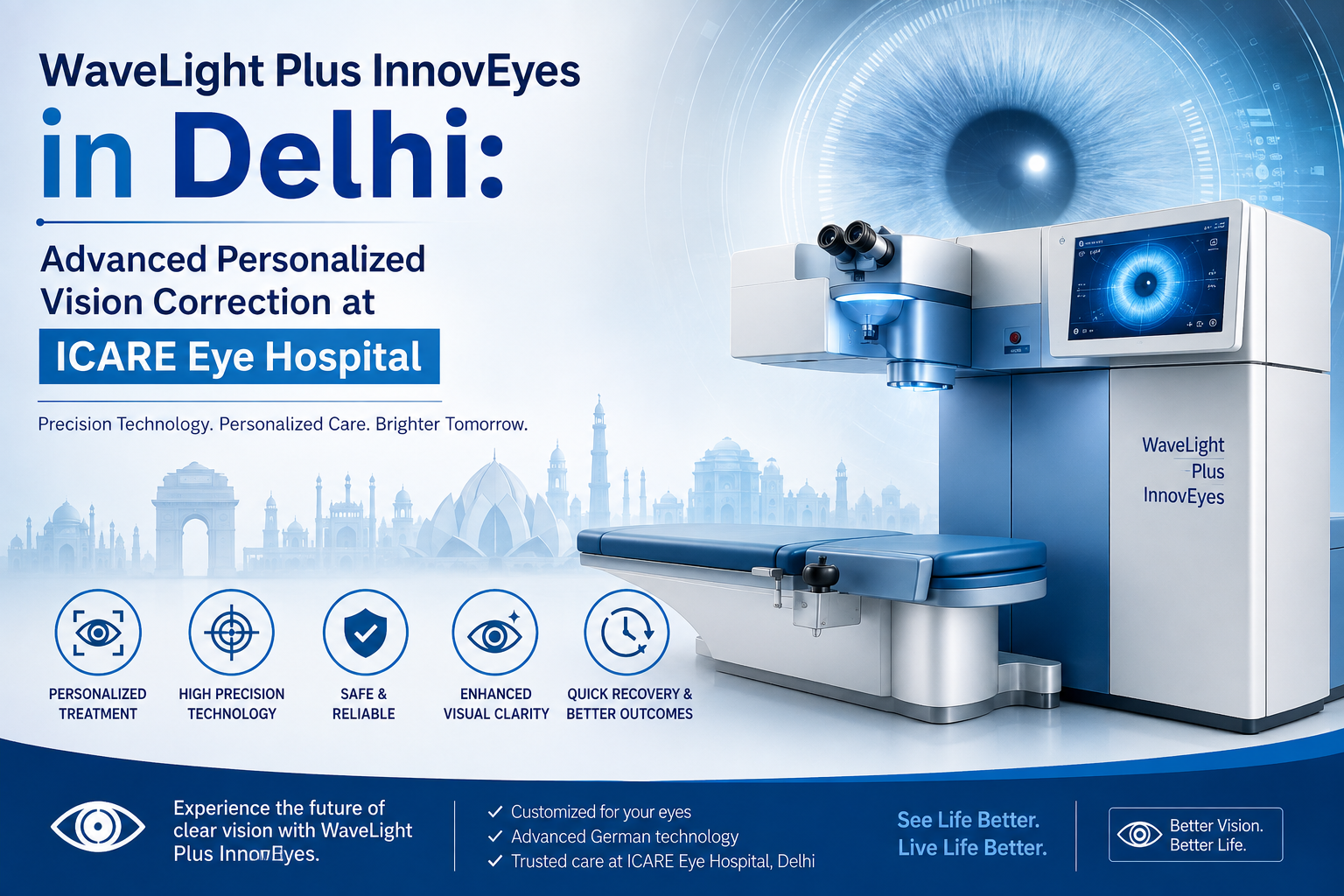
WaveLight Plus InnovEyes in Delhi: Advanced Personalized Vision Correction at ICARE Eye Hospital

For people who depend on spectacles or contact lenses every day, modern laser vision correction can offer an opportunity to reduce that dependence. Today, refractive surgery is moving beyond conventional, one-size-fits-all treatment toward technologies designed around the individual characteristics of each eye.

One such advanced platform is WaveLight Plus InnovEyes, which combines detailed eye mapping, digital eye modeling, AI-assisted planning and ray-tracing concepts to create a highly personalized treatment approach.

If you are searching for WaveLight Plus InnovEyes in Delhi, it is important to understand how this technology works, who may benefit from it, what the evaluation process involves, and why choosing an experienced eye-care centre matters.

At ICARE Eye Hospital, patients can discuss their refractive surgery options with eye specialists and undergo a detailed assessment before deciding whether advanced laser vision correction is suitable for them. ICARE is a tertiary eye-care institute in the NCR with NABH accreditation and advanced ophthalmic infrastructure.

What Is WaveLight Plus InnovEyes?

WaveLight Plus InnovEyes is an advanced approach to personalized laser vision correction. Instead of relying only on a standard glasses prescription, modern customized refractive planning can incorporate detailed information about the patient’s eye and visual requirements.

The technology is associated with AI-assisted analysis, highly detailed three-dimensional eye modeling and ray-tracing-based planning. These capabilities are intended to help doctors understand the optical characteristics of an individual eye and develop a more personalized treatment plan.

This is an important development because two people with the same spectacle power may not necessarily have identical corneal shape, optical characteristics or visual needs.

Why Personalized Vision Correction Matters

Traditional spectacle prescriptions primarily describe the refractive error that needs correction. However, the visual system is more complex than a simple number.

Factors such as:

  • Corneal shape
  • Corneal thickness
  • Higher-order aberrations
  • Pupil characteristics
  • Individual visual requirements
  • Eye health
  • Lifestyle and occupational demands

may all be considered when evaluating a person for refractive surgery.

A personalized approach aims to account for as much relevant information as possible before treatment.

This does not mean that every patient will require WaveLight Plus InnovEyes. The appropriate procedure depends on the individual’s eye examination, corneal characteristics, prescription, age, medical history and expectations.

How Does WaveLight Plus InnovEyes Work?

The process begins with detailed diagnostic testing.

1. Comprehensive Eye Assessment

Before any laser vision correction procedure, the eyes need to be evaluated carefully.

Your doctor may assess:

  • Current spectacle prescription
  • Corneal shape and thickness
  • Tear-film and ocular surface health
  • Eye pressure
  • Retinal health
  • Pupil characteristics
  • Other conditions that could affect surgical suitability

This evaluation is essential because laser vision correction is not appropriate for everyone.

2. Detailed Eye Mapping

Advanced diagnostic technology can generate a highly detailed representation of the patient’s eye.

The WaveLight Plus InnovEyes concept uses a digital model or “digital twin” of the eye to support personalized treatment planning.

Rather than looking at only the spectacle prescription, this approach aims to provide a more comprehensive understanding of the eye’s optical profile.

3. AI-Assisted Treatment Planning

Artificial intelligence can assist in analyzing complex diagnostic information and simulating potential treatment outcomes.

This can help the surgical team evaluate different treatment parameters before the actual procedure.

The goal is not to replace the ophthalmologist. Instead, advanced software and diagnostic technology can provide additional information that the surgeon uses alongside clinical judgment.

4. Ray-Tracing-Based Analysis

Ray tracing is another important concept associated with WaveLight Plus InnovEyes.

In simple terms, ray-tracing technology can model how light travels through the optical system of the eye. This provides another way of understanding the patient’s individual visual characteristics and planning personalized correction.

5. Customized Laser Treatment

Once the diagnostic evaluation is complete and the patient is considered suitable, the surgeon selects the appropriate treatment parameters.

The actual procedure and technique can vary depending on the patient’s anatomy and the specific platform available at the treating centre.

Therefore, patients should not assume that the same procedure or treatment settings will be appropriate for everyone.

WaveLight Plus InnovEyes vs Conventional LASIK

One of the biggest differences is the emphasis on personalization.

Conventional LASIK has been successfully used for many years to correct refractive errors. However, newer technologies can incorporate more detailed information into the treatment-planning process.

FeatureConventional LASIKWaveLight Plus InnovEyes Approach
Spectacle powerConsideredConsidered
Detailed eye diagnosticsYesAdvanced individualized analysis
Personalized planningVariesStrong emphasis
3D eye modelingNot typically centralDigital eye modeling
AI-assisted analysisLimited/technology dependentIntegrated into planning concepts
Ray-tracing analysisNot standardAssociated with platform
Treatment approachCustomized according to platformHighly personalized planning

The exact technology and treatment available will depend on the centre, equipment and surgeon’s assessment.

Who May Consider WaveLight Plus InnovEyes?

People who are considering spectacle removal may want to explore this technology if they have refractive errors such as:

  • Myopia (short-sightedness)
  • Hyperopia (long-sightedness)
  • Astigmatism

However, having a refractive error does not automatically make someone eligible.

A proper screening examination is necessary to determine whether laser vision correction is appropriate.

Your ophthalmologist may consider factors such as:

  • Stable spectacle prescription
  • Healthy cornea
  • Adequate corneal thickness
  • Healthy ocular surface
  • Suitable eye anatomy
  • Appropriate age
  • Realistic expectations

Patients with certain corneal conditions, uncontrolled eye disease, unstable prescriptions or other contraindications may require alternative options.

What Are the Benefits of a Personalized Approach?

The potential advantages of advanced personalized planning include a more detailed understanding of the patient’s individual optical profile and the ability to tailor treatment parameters accordingly.

Personalized Treatment Planning

Every eye has its own characteristics. Detailed diagnostic information can support treatment planning that is more individualized.

Advanced Digital Eye Mapping

Three-dimensional digital modeling can help represent the eye’s optical characteristics in greater detail.

Data-Assisted Planning

AI-assisted analysis can help clinicians interpret complex information and evaluate treatment possibilities.

Reduced Dependence on Spectacles

For suitable candidates, laser vision correction may reduce dependence on glasses or contact lenses.

However, results vary from person to person, and no laser procedure should be presented as a guaranteed way to permanently eliminate spectacles in every situation.

Is WaveLight Plus InnovEyes Safe?

Laser vision correction is generally considered an established category of refractive surgery, but every surgical procedure carries potential risks.

Possible side effects can include:

  • Temporary dryness
  • Glare
  • Halos
  • Fluctuating vision
  • Night-vision symptoms
  • Undercorrection or overcorrection
  • Need for enhancement in selected cases

The likelihood and severity of these effects vary between individuals.

This is why a comprehensive pre-operative assessment is one of the most important parts of the process.

Patients should discuss their complete medical and eye history with their ophthalmologist and understand both the expected benefits and potential risks before deciding on surgery.

What Happens During the Consultation?

If you are considering WaveLight Plus InnovEyes in Delhi, your first step should be a detailed refractive surgery consultation.

During the consultation, your eye specialist can:

  1. Review your spectacle prescription.
  2. Examine your cornea and overall eye health.
  3. Perform relevant diagnostic scans.
  4. Assess your suitability for laser vision correction.
  5. Discuss available procedures.
  6. Explain potential benefits and limitations.
  7. Recommend the option that best matches your eyes and visual requirements.

This approach is particularly important because the newest technology is not necessarily the best technology for every patient.

Why Choose ICARE Eye Hospital?

ICARE Eye Hospital is a tertiary eye-care institute serving patients in the National Capital Region. Its official website describes advanced clinical infrastructure, a large team of trained subspecialists and NABH accreditation.

ICARE also provides refractive surgery services and publishes information about advanced vision-correction procedures available through its ecosystem.

For someone searching for WaveLight Plus InnovEyes in Delhi, choosing a centre should involve more than simply looking at the name of a laser platform.

Consider:

  • Experience of the refractive surgeon
  • Quality of diagnostic testing
  • Pre-operative screening
  • Availability of different vision-correction options
  • Post-operative follow-up
  • Transparency about risks and expectations
  • Personalized treatment planning

The right procedure should be selected based on your eyes—not simply because a particular technology is newer.

WaveLight Plus InnovEyes or Another Laser Procedure?

Modern refractive surgery offers several technologies, including LASIK, and other customized procedures.

The best option depends on your individual anatomy and visual needs.

For example, some patients may be suitable for LASIK, while others may be better candidates for a flap-free procedure. A detailed evaluation is therefore more useful than choosing a procedure based only on advertising claims.

At a consultation, your surgeon can compare available options and explain why one procedure may be more appropriate for you.

Frequently Asked Questions

Is WaveLight Plus InnovEyes the same as traditional LASIK?

No. WaveLight Plus InnovEyes represents a more advanced personalized planning approach associated with detailed digital eye modeling, AI-assisted analysis and ray-tracing technology. The exact surgical technique depends on the patient’s evaluation and the platform used.

Can everyone undergo WaveLight Plus InnovEyes?

No. Eligibility depends on factors such as corneal health, thickness, prescription stability, eye health and other clinical parameters.

Can it remove my spectacles permanently?

Laser vision correction can significantly reduce dependence on spectacles in suitable candidates, but outcomes vary. Future age-related changes in vision, such as presbyopia, can still occur.

Is the procedure painful?

Laser vision correction is performed using local/topical anaesthesia, but patients may experience temporary discomfort or irritation during the recovery period. Your surgeon will explain what to expect.

How quickly can I return to normal activities?

Recovery varies according to the specific procedure and individual healing response. Your ophthalmologist will provide personalized instructions regarding work, driving, exercise and screen use.

Is WaveLight Plus InnovEyes better than every other laser procedure?

Not necessarily. There is no single procedure that is best for every eye. A detailed evaluation is needed to determine which technology is most suitable for an individual patient.

Take the Next Step Toward Clearer Vision

If you are tired of depending on spectacles or contact lenses and are exploring advanced vision correction, WaveLight Plus InnovEyes in Delhi may be an option worth discussing with a refractive surgery specialist.

The most important step is not simply choosing the newest technology. It is getting your eyes thoroughly evaluated and understanding which procedure is appropriate for your individual visual profile.

At ICARE Eye Hospital, a comprehensive assessment can help determine your suitability for advanced refractive surgery and guide you toward an appropriate vision-correction option.

Book a consultation today and discover whether personalized laser vision correction could be suitable for your eyes.

Icarelasik
Privacy Overview

This website uses cookies so that we can provide you with the best user experience possible. Cookie information is stored in your browser and performs functions such as recognising you when you return to our website and helping our team to understand which sections of the website you find most interesting and useful.